What Are Business Complaints?
Business complaints are expressions of dissatisfaction from customers, clients, employees, or partners about a product, service, or experience. They’re a normal part of doing business — and when handled well, they can actually strengthen trust and improve operations.
Complaints aren’t just “problems.” They’re feedback signals that something didn’t meet expectations.
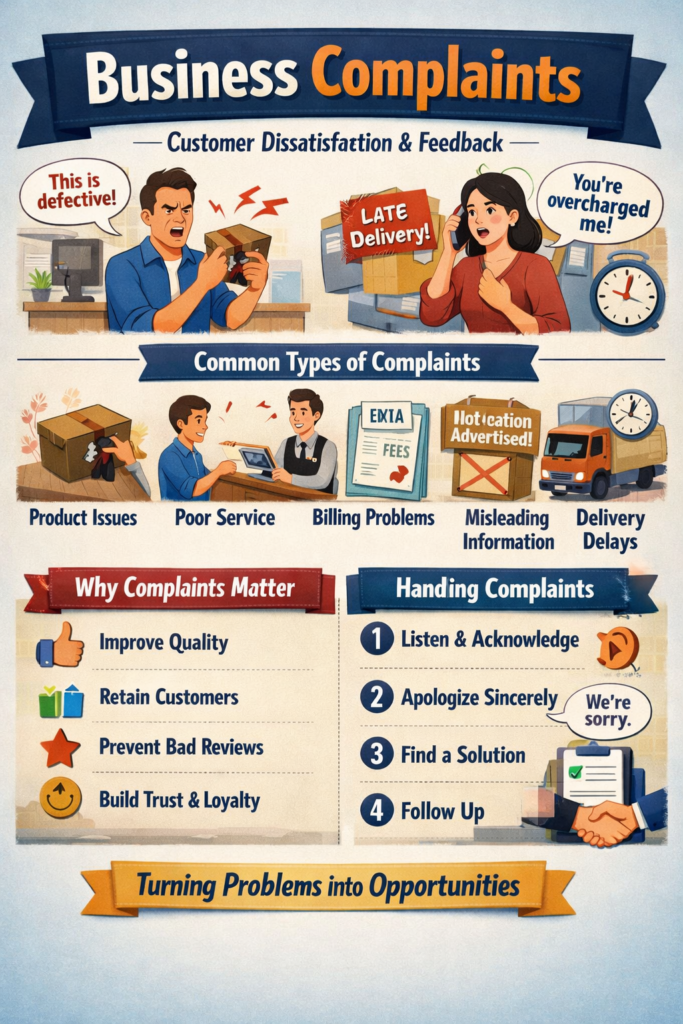
Common Types of Business Complaints
- Product or Service Quality
Customers may feel the product didn’t work as promised or the service didn’t meet standards.
Examples:
✔ Defective or damaged items
✔ Service delivered late or incorrectly
✔ Poor workmanship
- Customer Service Issues
How people are treated often matters as much as what they bought.
Examples:
✔ Rude or unhelpful staff
✔ Long wait times
✔ No response to emails or calls
- Billing and Payment Problems
Money-related issues quickly lead to frustration.
Examples:
✔ Incorrect charges
✔ Hidden fees
✔ Refund delays
- Miscommunication or Misleading Information
When expectations don’t match reality, complaints follow.
Examples:
✔ Advertising that doesn’t match the actual product
✔ Unclear policies
✔ Confusing terms and conditions
- Delivery and Logistics Issues
Especially common in retail and online businesses.
Examples:
✔ Late deliveries
✔ Missing items
✔ Damaged shipments
Why Business Complaints Matter
Ignoring complaints can damage reputation, but handling them well can:
✔ Improve customer loyalty
✔ Highlight areas needing improvement
✔ Prevent negative reviews
✔ Strengthen brand credibility
✔ Turn unhappy customers into repeat customers
A customer who complains is often giving the business a second chance.
How Businesses Should Handle Complaints
- Listen Without Interrupting
Let the customer fully explain the issue. Feeling heard reduces anger immediately.
- Acknowledge the Problem
Even if the business isn’t fully at fault, show empathy.
Example: “I understand how frustrating this must be.”
- Apologize Sincerely
A simple, genuine apology can go a long way — it shows accountability and respect.
- Investigate Quickly
Gather facts, check records, and understand what happened before offering a solution.
- Offer a Fair Solution
Solutions may include:
✔ Refunds
✔ Replacements
✔ Discounts
✔ Service corrections
✔ The key is fairness and speed.
- Follow Up
✔ Checking back shows the business truly cares and wants to make things right.
✔ Turning Complaints into Opportunities
✔ Smart businesses use complaints to improve by:
✔ Updating policies
✔ Training staff
✔ Improving product quality
✔ Fixing weak processes
Many successful companies grow because they listen to complaints, not despite them.
Final Thought
Complaints aren’t the enemy of a business — silence is. When customers stop complaining, they usually just leave. A complaint is a chance to fix a problem, rebuild trust, and do better next time.